Some links on this page are affiliate links. If you buy through them, Rotor Magazine may earn a commission at no extra cost to you. It never affects what we recommend. How we make money.
A tandem skydive is the easiest way to jump out of a plane: you’re harnessed to a certified instructor who handles the parachute, so all you need is about half an hour of training and a willingness to step out of the door. Here’s what a first jump costs in 2026, what happens on the day, and how to pick a good drop zone.
Tandem skydiving at a glance
| What to expect | |
|---|---|
| Typical price (US) | About $250–300 for the jump; roughly $150–350 depending on location and day |
| Photos or video | Usually extra, about $100–190 |
| Exit altitude | Often 10,000–14,500 ft, depending on the plane |
| Freefall | About 30 seconds from 10,000 ft; about 60 seconds from 14,000+ ft |
| Parachute ride | About 5–7 minutes |
| Training | About 20–30 minutes on the ground |
| Time at the drop zone | Plan on half a day; weather and plane loads can mean waiting |
How much does a tandem skydive cost?
Most US drop zones charge about $250–300 for a tandem jump. Weekday jumps and group bookings are often cheaper; walk-ins and weekends cost more. The price normally includes ground training, all equipment, the plane ride and your instructor.
Watch for extras before you book:
- Photos and video: usually $100–190 more. A handcam (filmed by your instructor) is cheaper; a separate camera flyer costs more but gets better shots.
- Altitude upgrades: some drop zones charge extra to go higher. Others jump from 14,000 ft or more as standard.
- Weight surcharges: some charge more above about 200 lb.
- Deposits: many require a small non-refundable deposit to reserve.
What happens on jump day
- Check in and sign the waiver. Bring photo ID. You’ll be weighed and fitted for a harness.
- Ground training. Your instructor shows you how to exit the plane, the body position for freefall (hips forward, head back, legs bent) and how to lift your legs for landing.
- The plane ride. The climb to altitude takes roughly 15 minutes and gives you great views. Your instructor connects your harness to theirs on the way up.
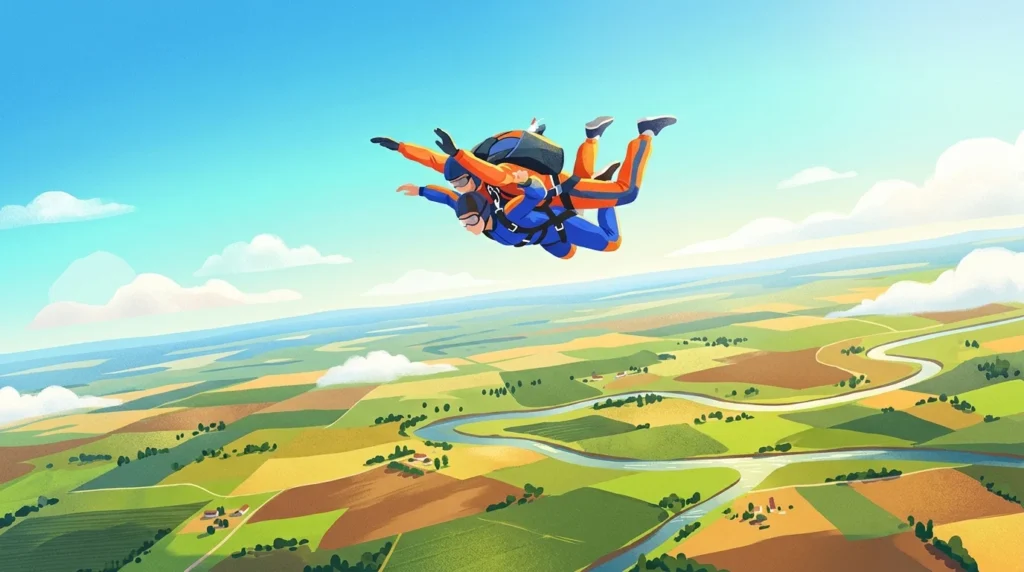
- Freefall. You leave the plane together and fall at around 120 mph for 30–60 seconds. Most first-timers say it feels more like flying than falling.
- Parachute ride. Your instructor opens the parachute well above the ground. US safety rules require tandem parachutes to be open by 5,000 ft. The ride down is quiet, and many instructors let you steer.
- Landing. You lift your legs and slide in on your bottom or land on your feet.
Who can do a tandem skydive?
- Age: in the US, the United States Parachute Association (USPA) requires you to be old enough to sign a legal waiver where you jump, which is 18 in most places. In Canada and elsewhere, rules vary by country and drop zone, so check before booking.
- Weight: most drop zones set a limit of about 225–250 lb, because the equipment is rated for a maximum combined weight.
- Health: you should be in reasonable health. Talk to your doctor first if you have heart, back, neck or other medical conditions, or if you’re pregnant.
- Clothing: comfortable clothes and sneakers. No sandals or boots with hooks.
Is tandem skydiving safe?
Skydiving carries real risk, but it’s far safer than most people assume. USPA figures show 16 skydiving fatalities in the US in 2025 out of about 3.47 million jumps, or roughly 1 in 217,000 jumps, across all types of skydiving. Tandem instructors must complete a manufacturer’s tandem course, hold a USPA tandem rating and carry a current medical certificate.
To jump with a well-run operation, choose a drop zone that’s a USPA Group Member, ask how long their instructors have been jumping, and don’t pressure anyone to fly in bad weather.
How to choose a drop zone
- USPA membership (US) or the national equivalent elsewhere.
- Altitude: 13,000–14,500 ft gives you about twice the freefall of a 10,000 ft jump.
- All-in price: compare the price with video, altitude and any fees, not just the headline rate.
- Reviews that mention instructors and organisation, not just the thrill.
- Scenery: coastlines, mountains and city skylines make the jump and the video far better.
Compare tandem jumps near you, check reviews and the all-in price including video, and look for free cancellation in case the weather turns.
Want to try it without the plane? Indoor skydiving
Indoor skydiving uses a vertical wind tunnel to recreate freefall. There’s no plane and no height, flights last about a minute each, and it’s open to children as well as adults. It’s a good way to see if you like the feeling before a real jump, or a fun alternative if you’re under the age limit.
FAQ
How much does it cost to skydive for the first time?
Most US tandem jumps cost about $250–300, plus about $100–190 if you want photos or video.
How long is the freefall?
About 30 seconds from 10,000 ft and about 60 seconds from 14,000 ft or higher. The parachute ride lasts another 5–7 minutes.
How old do you have to be to skydive?
In the US, generally 18, because you must be old enough to sign a legal waiver. Rules differ in other countries.
Do I need any experience?
No. Tandem skydiving is designed for complete beginners. Your instructor controls the parachute and the landing.
What if the weather is bad?
Drop zones postpone jumps for low cloud, strong wind or rain. Book a morning slot with flexible rescheduling and keep the rest of the day free.
Related reading
- Skydiving near Toronto: the 3 closest drop zones compared
- Las Vegas helicopter tours: Strip night flights vs. Grand Canyon
- Learn to fly: how to become a pilot
Last reviewed October 2026. Prices vary by drop zone and season; confirm details when you book.