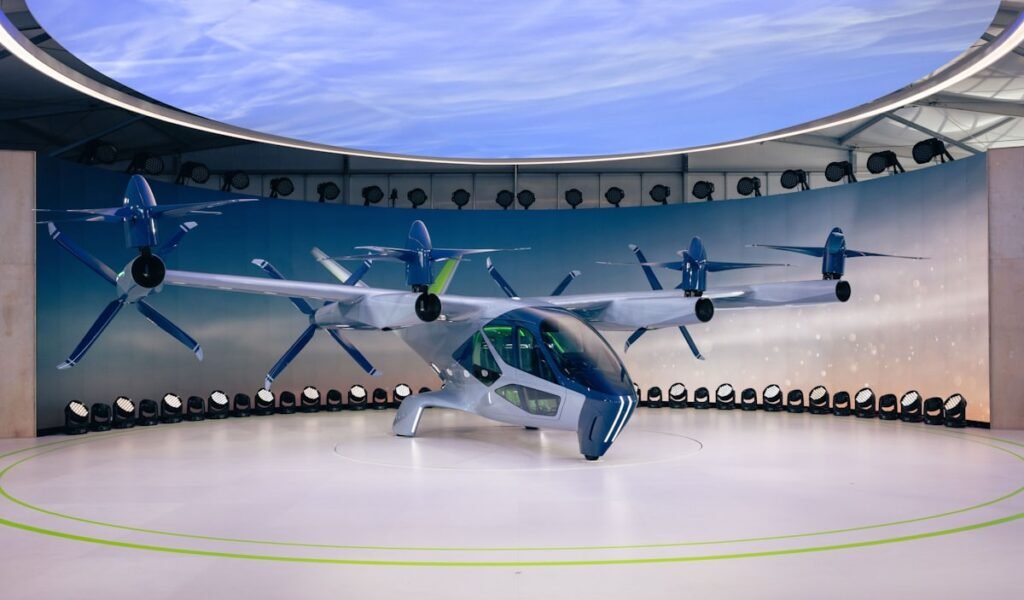
No US eVTOL manufacturer holds a full FAA Type Certificate yet. That single fact gets lost in a lot of the coverage this industry generates, so it’s worth stating plainly before getting into who’s ahead.
Who’s Actually Closest
Joby Aviation is the clear leader on certification progress. The company has advanced through Stage 4 of the FAA’s five-stage type certification process and flew its first FAA-conforming, production-representative aircraft in March 2026 — the point where the actual production hardware matches what the FAA has been reviewing throughout the process, not just an earlier prototype. Archer Aviation is the next closest US competitor, having closed out its “means of compliance” documentation — the agreed-upon list of exactly how it will prove the aircraft meets FAA safety standards — and sitting around Stage 3.
Why the Timelines Disagree With Each Other
This is the part worth being honest about: credible sources genuinely disagree on when either company actually finishes. Some industry trackers point to a realistic mid-to-late 2026 certificate for Joby. Other analysts putting Joby’s probability of certifying by mid-2027 at only 20 to 30 percent, and Archer meaningfully further out. Both things can be true at once — genuine progress, and a timeline that keeps sliding, because type certification for a genuinely new category of aircraft is being negotiated in parallel with the aircraft itself, not checked against decades of existing precedent the way helicopter certification was.
The Field Has Already Thinned Out
Not every well-funded competitor from a few years ago is still standing. Lilium filed for insolvency for a second time and is being wound down. Volocopter was rescued by new ownership and has pivoted toward ultralight aircraft rather than certified air taxi service. Supernal paused active development after leadership departures. The eVTOL field in 2026 is smaller and more consolidated than it was at the height of the SPAC era.
Certified Already — Just Not in the US
Globally, exactly two companies hold full type, production, and operating certificates: EHang and AutoFlight, both certified through China’s CAAC rather than the FAA, and both already flying revenue passenger or cargo operations domestically. Beta Technologies, meanwhile, is pursuing a different near-term path — Hawaii inter-island cargo operations starting in 2026, with passenger service targeted for 2027, potentially reaching revenue service before a full FAA passenger type certificate is even in hand for anyone in the US market.
What to Actually Watch
Type certification is a major milestone, but it isn’t the finish line — a Production Certificate to build aircraft at scale, and an Air Operator Certificate for whoever actually flies passengers, both still have to follow. This page will get updated as the field moves; right now, the honest summary is: real progress, still years of process ahead, and the company furthest along isn’t guaranteed to be first to actually carry a paying passenger in the US.