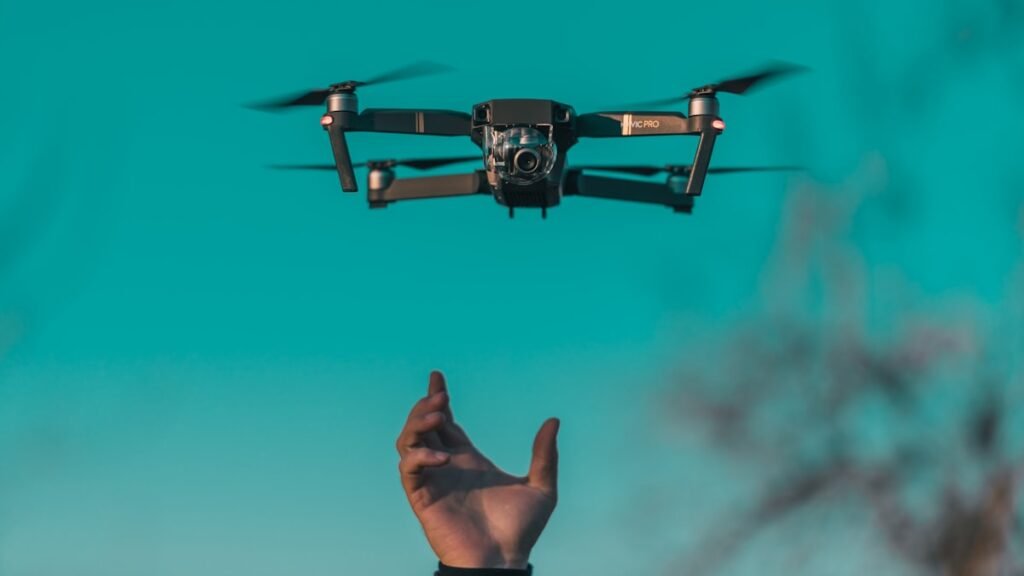
The most significant recent shift in Gulf air defense isn’t a new missile system — it’s an acknowledgment that missiles were never the right tool for this specific job, and a move toward fighting cheap drones with comparably cheap drones instead.
Importing Ukraine’s Experience, Not Just Its Hardware
Ukraine has spent roughly four years defending against sustained Shahed and Shahed-derived (Geran-2) drone attacks, and that experience has produced something more valuable than any single piece of hardware: an operationally tested doctrine for countering mass drone attacks economically rather than just technically. Purpose-built interceptor drones developed out of that experience — commonly cited in the $2,000 to $5,000 per-unit range — are now being transferred to Gulf states and to US Central Command directly, alongside the operational knowledge of how to actually employ them at scale.
This is a meaningfully different kind of technology transfer than a typical arms sale. It’s importing four years of combat-tested trial and error about intercept geometry, sensor cueing, and swarm-engagement tactics against a threat that most Gulf air defense networks, built around traditional systems, were never specifically designed to counter economically.
Why This Matters More Than the Raw Technology
The interceptor drones themselves aren’t especially exotic — the significance is entirely in the economics. A $3,000 interceptor engaging a Shahed-class drone that itself costs in the low tens of thousands of dollars is a fundamentally different, and sustainable, cost exchange compared to firing a surface-to-air missile costing hundreds of thousands or millions of dollars at the same target. For a defender facing sustained, repeated drone incursions rather than a single isolated attack, that difference compounds every single day the threat continues — which is exactly the scenario Gulf states and CENTCOM are now planning around, rather than treating drone incursions as rare, one-off events best handled by existing high-end systems.
Deployment Is Still Early-Stage
It’s worth being honest that this remains an early operational deployment, not a fully mature, widely fielded capability. Systems described in current reporting are still being integrated into broader air defense networks, and the sensor cueing, command-and-control integration, and personnel training required to use cheap interceptors effectively at scale takes time to stand up properly — a genuinely different institutional problem than the procurement decision to acquire the interceptors themselves. Layering a new, lower-cost interceptor tier underneath existing high-end systems requires new doctrine about when to use which tier, not just new hardware sitting alongside the old.
Why Layering, Not Replacing, Is the Actual Model
None of this replaces existing high-end air defense — it sits underneath it as a new, cheaper first tier specifically for the threat class that expensive systems are economically mismatched against. High-end interceptors remain the right tool against genuinely high-value, sophisticated threats like ballistic missiles or manned aircraft; the point of the cheap-interceptor tier is to avoid spending that same expensive capability against a threat class specifically designed to make expensive intercepts a losing trade. Getting the doctrine right about which tier engages which threat, in real time, under attack, is now as much the challenge as fielding the interceptors themselves.
The Direction This Points
The broader trend this represents — layering cheap, purpose-built counter-drone systems underneath traditional high-end air defense rather than relying on the high-end tier alone — is likely to keep expanding as more militaries confront the same cost-exchange problem the Shahed program was specifically designed to exploit. Expect this pattern, tested first in Ukraine and now spreading to the Gulf, to become the default architecture for counter-drone defense more broadly, rather than a regional-specific adaptation limited to Middle Eastern security concerns.