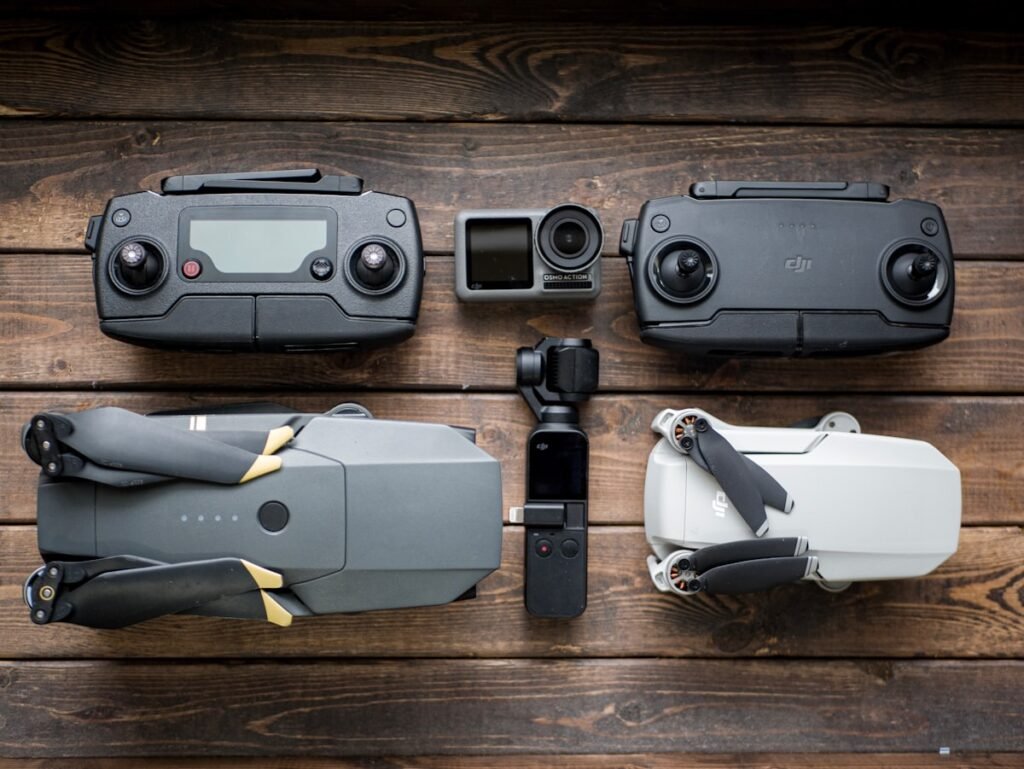
Between federal procurement restrictions, employer policy, and buyers who’d simply rather not deal with the regulatory uncertainty, a real market now exists for people who need a drone that isn’t DJI or another Chinese-manufactured platform. The honest answer is that the alternatives are genuinely good in specific ways and genuinely behind in others — this isn’t a like-for-like swap, and pretending otherwise sets buyers up for disappointment.
Skydio: The Clearest Domestic Option
Skydio is the most established US-based alternative, built specifically around autonomous flight and obstacle avoidance rather than trying to match DJI feature-for-feature. It has real institutional adoption to back that up: every branch of the US military and more than 200 public safety agencies fly Skydio systems, and its domestic production lets it sidestep the federal restrictions affecting Chinese manufacturers entirely. For inspection work — power lines, telecom towers, bridges — where autonomous obstacle avoidance genuinely changes safety and efficiency, Skydio’s technology is by most independent assessments legitimately competitive with, and in some scenarios ahead of, DJI’s equivalent capability.
Where it doesn’t compete: price and product breadth. Skydio’s lineup is narrower than DJI’s sprawling catalog, and it doesn’t chase the low-cost recreational and prosumer segments where DJI’s volume economics are hardest to beat. If your use case is enterprise inspection rather than general-purpose flying, that tradeoff is easy to accept. If you need a cheap, disposable-feeling drone for varied general use, it’s a harder sell.
The Ecosystem Gap Is Bigger Than the Hardware Gap
Buyers switching away from DJI for the first time are often more surprised by the ecosystem difference than the hardware difference. DJI’s dominance built out a huge secondary market: third-party accessories, a mature repair and parts network, extensive third-party flight-planning and processing software built around DJI’s SDK, and a large community of trained operators already fluent on DJI’s controller layout and app. Alternatives — Skydio included — have real but visibly smaller versions of all of that. A repair that would be routine and cheap for a DJI system can mean a longer wait and fewer options for a Skydio unit, simply because there are fewer repair shops that specialize in it and a thinner secondary parts market. That’s not a reason to avoid switching if the restriction is real for you — it’s a genuine cost to budget for that a spec-sheet comparison alone won’t show.
Matching the Alternative to the Actual Job
The practical decision comes down to matching the alternative to what you’re actually doing, not to whichever brand markets itself hardest as “the DJI alternative.” Infrastructure and utility inspection work, where autonomous navigation around complex structures is the core value, is Skydio’s strongest fit. Government, defense-adjacent, and public-safety work where procurement rules make the decision for you also points toward Skydio or AeroVironment depending on the specific agency’s approved-vendor list. General commercial photography, real estate, and lower-stakes mapping work — where DJI’s price and feature breadth matter more than autonomy — is where the alternatives currently feel most like a compromise, and where it’s worth honestly asking whether the restriction driving the switch actually applies to your specific situation before assuming you need to move at all.
Autel: Complicated, and Also Chinese
Autel Robotics is worth naming precisely because it’s a common point of confusion — many buyers looking for a “DJI alternative” land on Autel without realizing it’s also a Chinese manufacturer, and also named in the same regulatory actions affecting DJI. Autel is actively disputing its own Covered List placement, arguing the FCC relied on undisclosed evidence and complaints originally aimed at DJI rather than at Autel’s own specific practices. Whatever the merits of that legal argument, the practical point for buyers is straightforward: Autel does not solve the “I need non-Chinese hardware” problem, regardless of how it’s sometimes marketed as a DJI competitor.
Parrot and AeroVironment: Narrower, but Genuinely Non-Chinese
Parrot, a French manufacturer, offers a real non-Chinese option with a longer track record than Skydio, though a smaller enterprise ecosystem and less aggressive recent product cadence. AeroVironment sits at the more defense-oriented end of the spectrum — a legitimate option for government and defense-adjacent buyers, less suited to general commercial or prosumer use.
What the Honest Tradeoff Actually Looks Like
None of these alternatives currently match DJI on the combination of price, feature breadth, and rapid product iteration that built DJI’s dominance in the first place — that’s the direct consequence of the manufacturing ecosystem advantage that made China’s drone industry hard to compete with to begin with. What the alternatives do offer is a genuine answer to a different question: not “which drone is cheapest or most full-featured,” but “which drone can I legally operate under federal restrictions, or justify to an employer or client who won’t accept Chinese hardware regardless of ban status.” For that specific, increasingly common buyer, Skydio is the strongest general-purpose answer today, with Parrot and AeroVironment as narrower options depending on the specific use case.